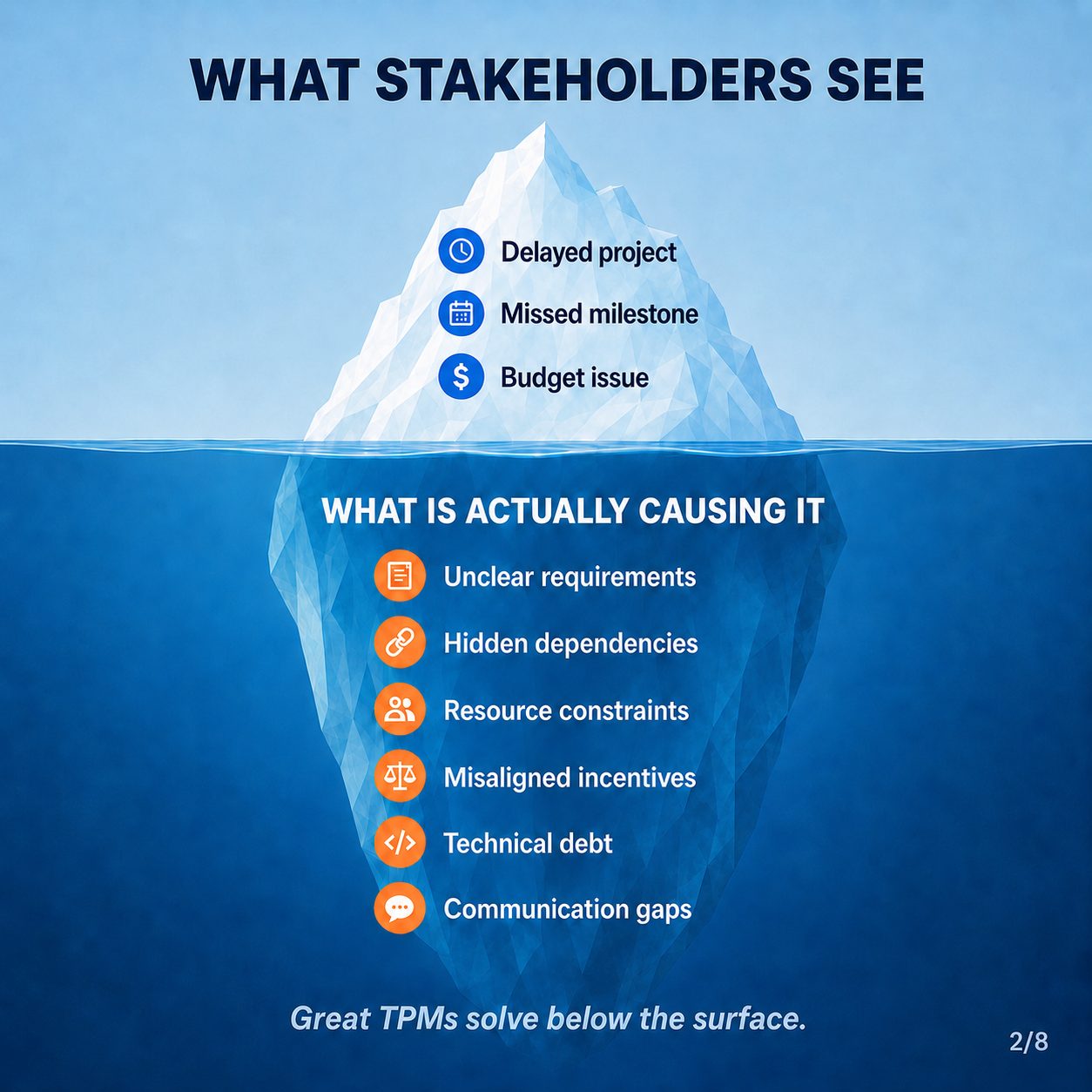
When a program is in trouble, what leadership sees is a delayed project, a missed milestone, a budget issue. What's actually causing it almost always lives below the surface: unclear requirements, hidden dependencies, resource constraints, misaligned incentives, technical debt, communication gaps.
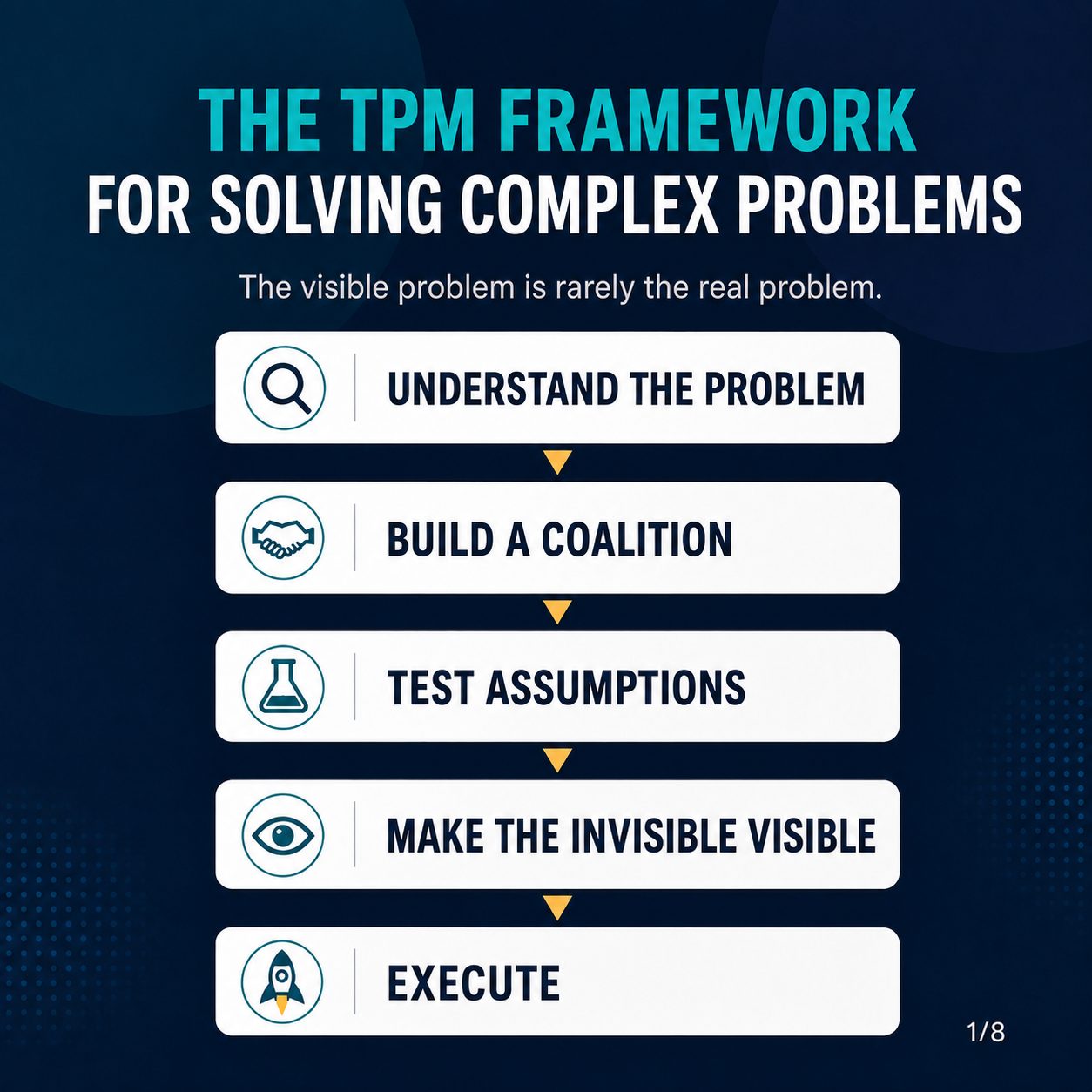
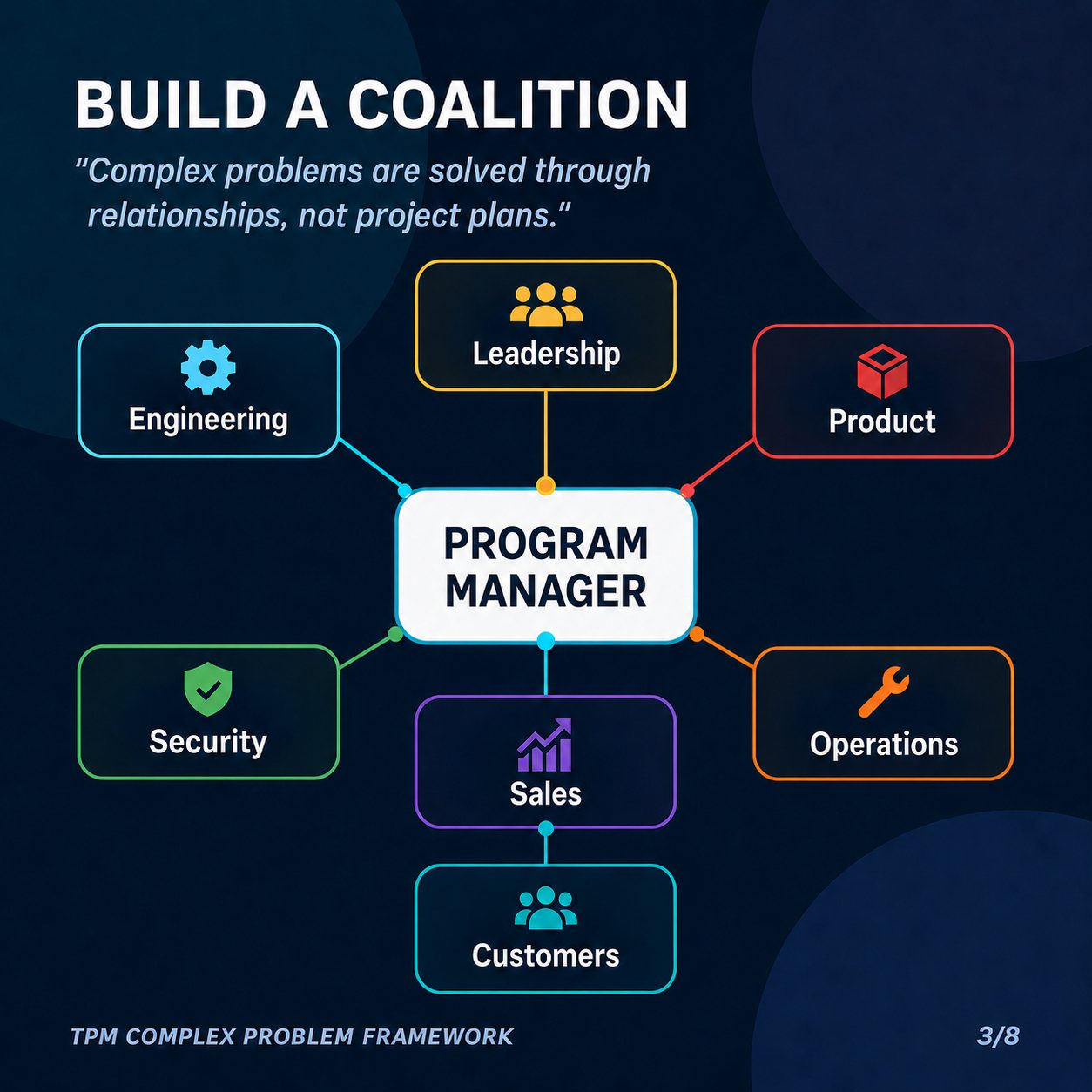
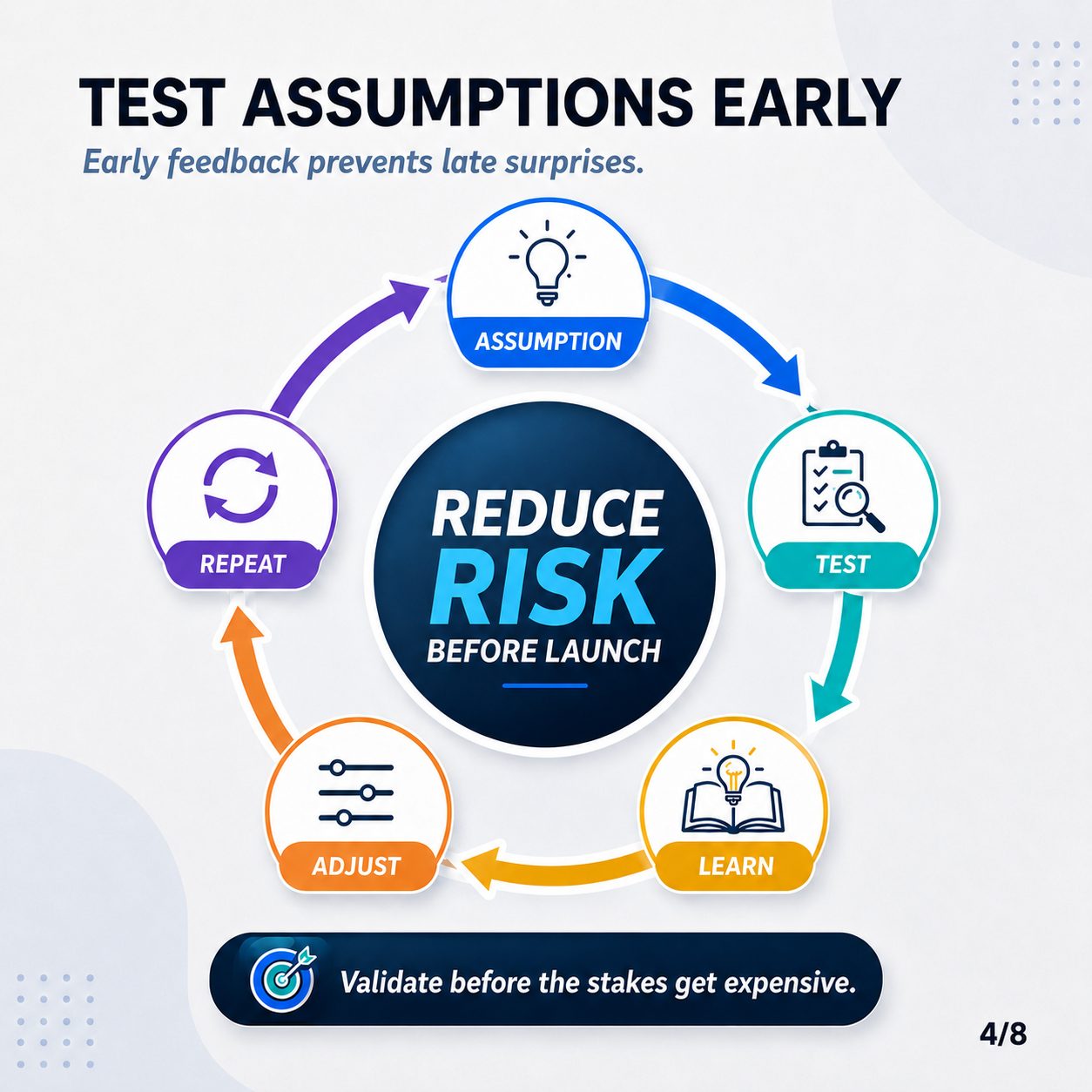
That gap — between the visible symptom and the real problem — is where technical program managers earn their keep. This is the five-move framework I use to close it: understand the problem, build a coalition, test assumptions early, make the invisible visible, and execute.
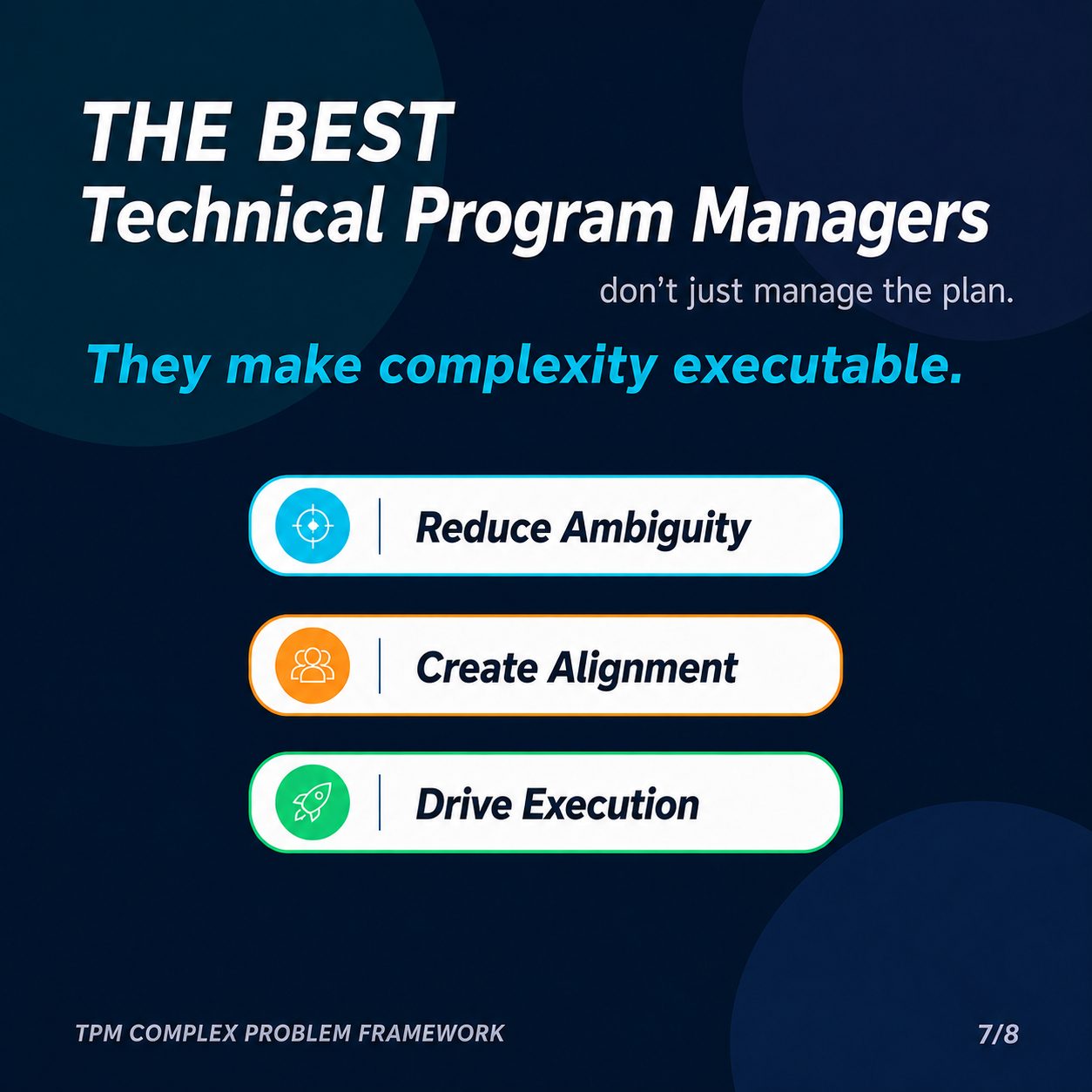
The best TPMs don't just manage the plan. They make complexity executable.
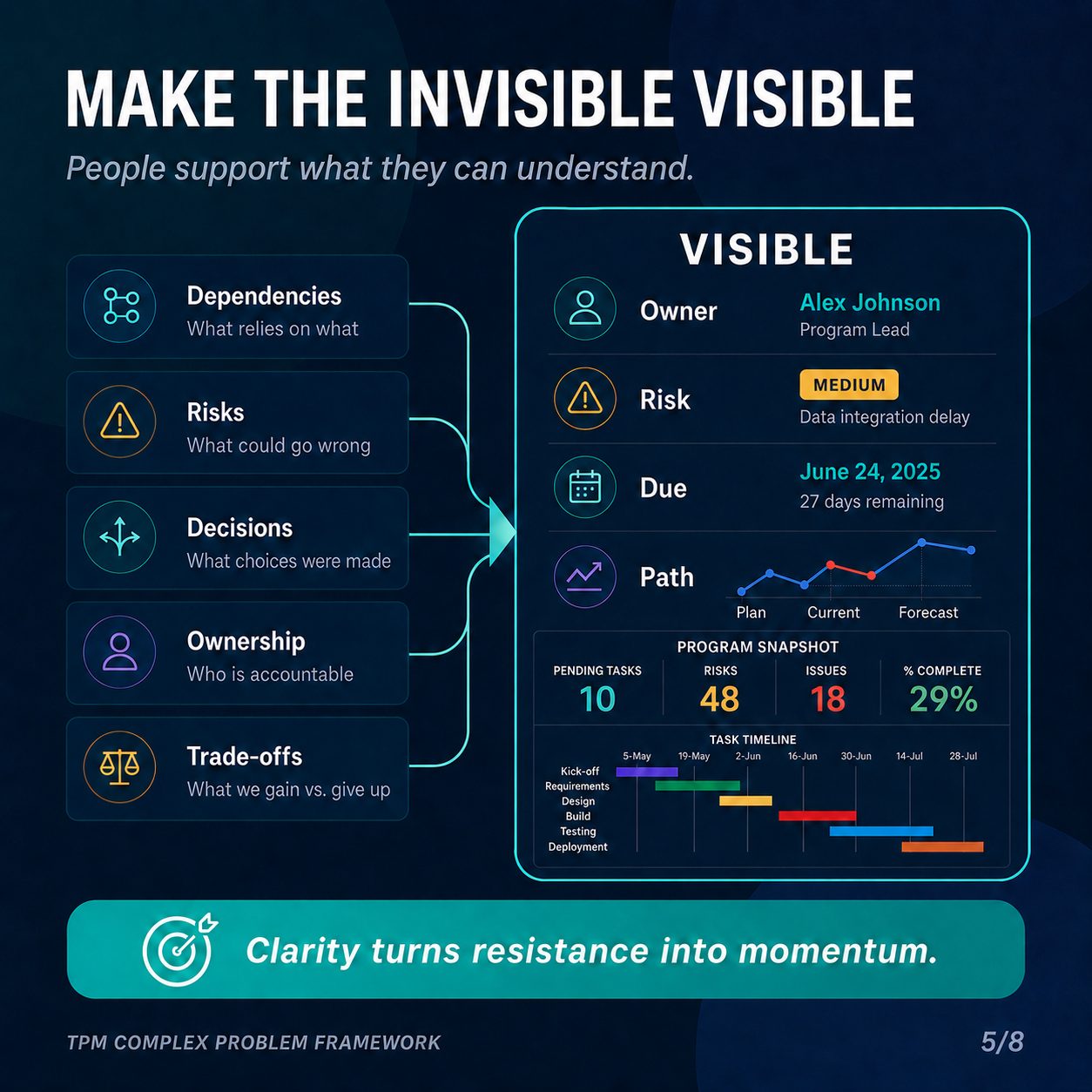
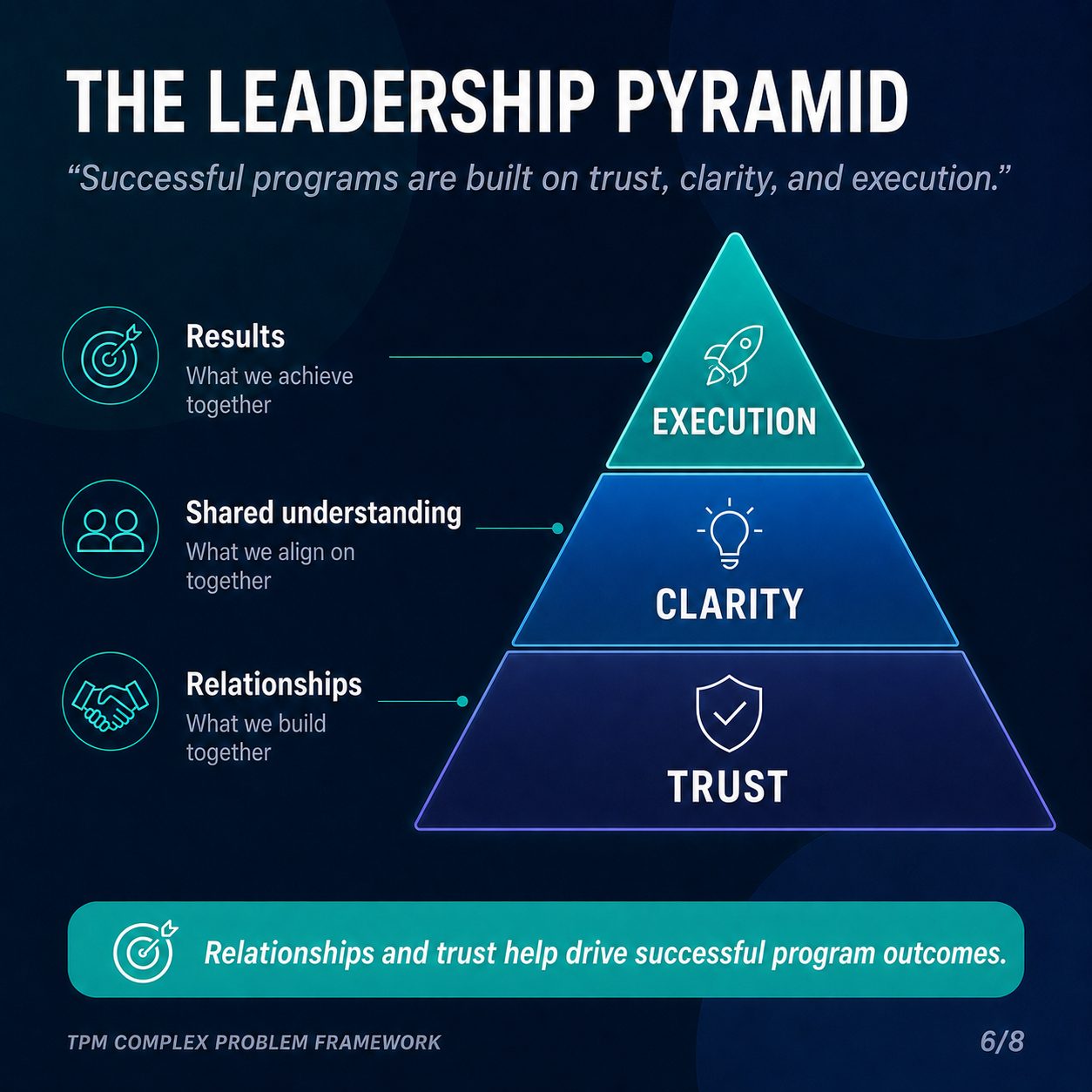
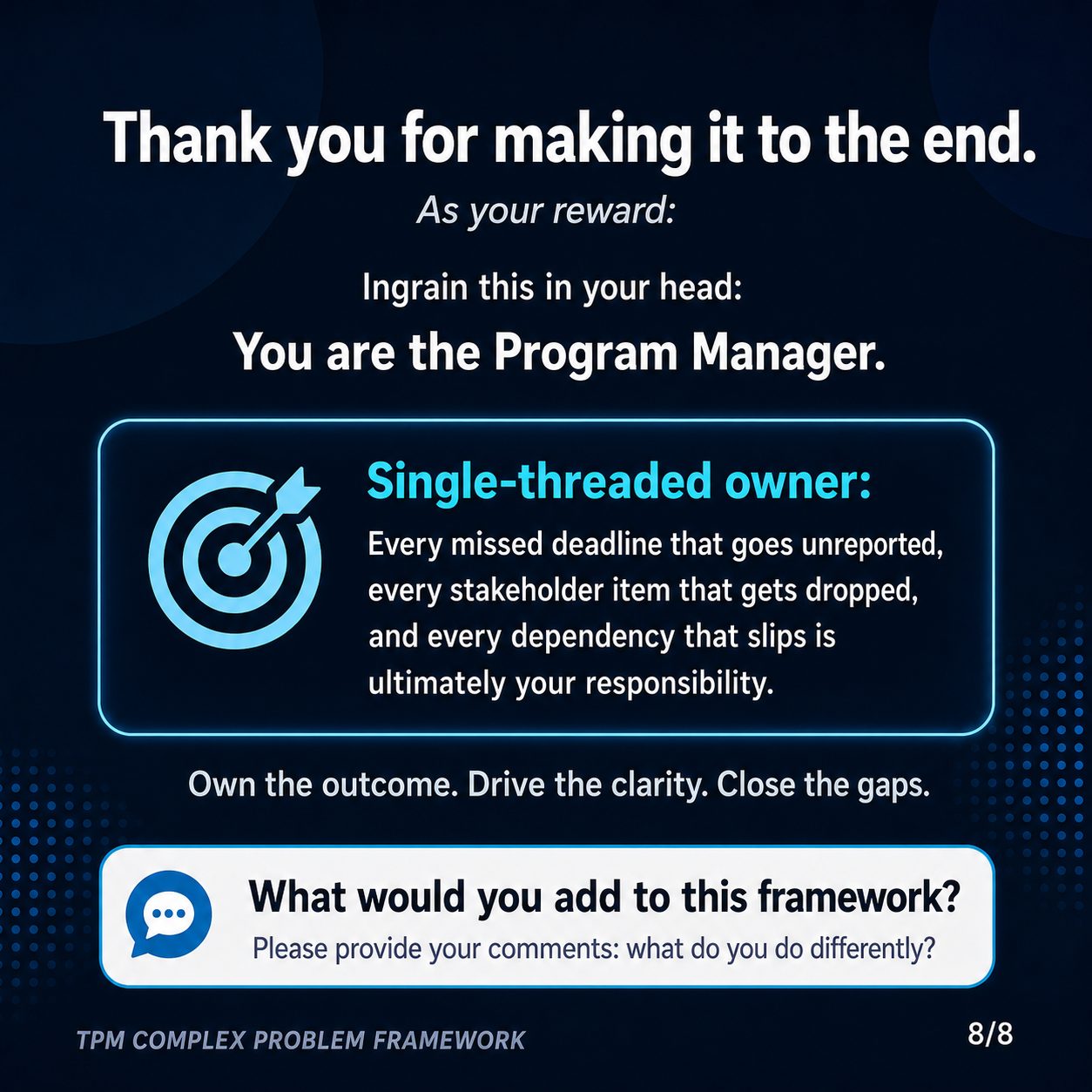
What would you add to this framework?
Own the outcome. Drive the clarity. Close the gaps. If you'd run it differently, I'd like to hear it — join the conversation on the original post.
Comment on LinkedIn